What former Soviet states have achieved in 30 years of independence

2020/09/01

During 30 years of independence, former Soviet countries have achieved different results. However, the results of independence are not always comforting.

As Pavel Pryanikov noted on his Facebook page, one can already summarize brief economic results of the last 30 years on post-Soviet space.

According to him, Russia finally recovered to the level of the 1990 RSFSR just a few years ago. It is believed that we have per capita GDP worth 10,000 dollars per person (approximately the level of Malaysia, in Europe - Romania). Thus, the country has spent three decades to return to the level from which it began its independence.

The years of "rising," under the guidance of "brilliant managers," generals and strategists could only demonstrate that, given the macroeconomic stagnation since the late 1970s, the last 40 years have been the era of the "Great Stagnation" for Russia.

The Baltic States traditionally had a higher living standard in comparison with the rest of the USSR. You can treat them as you like, but today the per capita GDP of the Baltic States amounts to 15-20 thousand dollars. That is, they have added a little over the past 30 years, but primarily owing to Russia and the EU.

Ukraine and Moldova, unfortunately, became epicenters of major transformations and national construction. They did not differ much from the RSFSR when they used to be members of the USSR. They had the same per capita GDP worth $10,000). Today, however, this figure for them is about 2,5-3 thousand. In 30 years, their economic level has collapsed four times given their economic dependence on the Russian Federation. Today, Ukraine and Moldova stand in line with such countries as Nigeria, Laos and Honduras (in terms of GDP per capita).

Contrary to Lukashenka's stubbornness, the GDP of Belarus is $6,000. This is about 60 percent of their Soviet level (a dubious "economic miracle"). In many respects, the Belarusians managed not to degrade to the level of Ukraine only with the help of financial support from Russia at the level of ten percent of Belarusian GDP.

According to Pryanikov, "this could be compared to Russia receiving $140 billion each year from someone, ten percent of our GDP, or 10 trillion rubles (this is a half of the federal budget)."

In the republics of the Caucasus, the per capita GDP indicator collapsed to $4,000 (even oil-and-gas Azerbaijan manages to live so poorly; this is the level of Angola and El Salvador). Their economies  could be 2-3 times higher.

Thanks to mineral resources, Kazakhstan has kept at the level of Russia - $9,000. Oil, gas and metals did not let the country fall below the level that they had in 1990.

Central Asia slips into the Middle Ages

Tajikistan's per capita GDP is evaluated at $800. Tajikistan was never a well-to-do nation, not even in the times of the USSR, the Tajik economy collapsed eight times. The situation is pretty much the same in Haiti and Rwanda.

  • Kyrgyzstan - $1200.
  • Uzbekistan - $1500 (similar to Cameroon and Zambia).
  • Turkmenistan - $7,500. The country managed to maintain its late Soviet levels through gas exports, having made its citizens rightless.

Thirty years have given all countries an opportunity to prove themselves and show the results of their independent "voyage."

We can now observe the results of the civilizational catastrophe (ten out of fifteen countries) and neat poverty (the Baltic States, Russia, Kazakhstan), the author sums up.

However, experts also discuss which country they can now call "normal," and life in it - decent.

Given the frequency of mass shootings and incidents of police violence in the United States, there is absolutely no reason left to praise America. This, of course, breaks the mould for those who, over the past 20 years, have been glorifying the political and ideological structure of the West. Republicans and Democrats, with their undercover struggle for the White House, Congress, state administrations and large industrial and financial assets, have got everyone inside and even outside the country.

Although the US system has always looked very stable, it turned in the infamous year 2020 that citizens and political forces of the formerly exemplary democracy divide themselves into "fascists" and "Marxists" today - two ideologically irreconcilable groups.

If in today's America you are standing up for BLM, gays, green energy and acceptance of migrants in the country, then you are a Marxist. If you stick to traditional views on family, religion, oil and gas and gender equality, then you're a fascist or a Nazi.

In Europe, Alternative for Germany and the French National Front have managed to attract many followers in recent years against the backdrop of controversial migration policies in the European Union and the introduction of more liberal views on marriage and the Church. Different electoral groups endlessly fight among themselves.

Thus, today's healthy state is a country that is capable of accepting its own history in all its diversity and analyzing its mistakes - a country that does not obey requirements to pay and repent. This is also a country that respects its own military and law enforcement forces, which sees decades ahead, does not live in debt, which does not live from one electoral cycle to another, but eyes long-term sustainable development and gives conditionally equal opportunities for implementation.

Let's block ads! (Why?)

Читать далее ...

Germany about relations with Russia: This is the end

2020/09/01

Germany has been at the forefront over the past few weeks in terms of its stance on how to define further relations with Russia.

The United States has been busy with congresses of Democratic and Republican parties. Eastern European states, which usually do not miss an opportunity to speculate about Russia, are preoccupied with what is happening in Belarus.

After Russian opposition activist Alexei Navalny was delivered to Charite clinic in Berlin, Germany started paying a lot of attention to the prospects for further relations with Russia. In addition, officials from any other countries have expressed plenty of opinions in the past few weeks about the need for Germany to reconsider its policy towards the Russian Federation.

Although German Chancellor Angela Merkel has refused to revise policy towards Russia, there is little ground for optimism about the future prospects of Russian-German relations.

Germany's lowest of the lows with Russia

For example, Wolfgang Ischinger (Chairman of the Munich Security Conference) said in an interview with Der Spiegel that after the incident with Aleksei Navalny, the relations between Russia and Germany had reached their lowest point.

"This, unfortunately, is the end, including for the idea of strategic partnership," Ischinger said.

In his opinion, the likely sanctions against Russia will have no effect. They are a tool that governments are willing to use when nothing else comes to mind," Ischinger said.

He believes that the situation with Navalny gives Germany an opportunity to show that Berlin is ready to help, despite its disagreement with the Russian authorities.

"We are not enemies for either Russia or the Russians," Ischinger said.

Not only the "lowest point", but also "thick clouds"

In turn, German Foreign Minister Heiko Maas reiterated the thesis about the "clouds" that were hanging over Germany's relations with Russia.

"On the one hand, we need constructive relations with Moscow, because without or in spite of Russia, Europe will not become a safer place," Maas said, adding that such a position comes in line with "reasonable real European policy."

"On the other hand, we say it absolutely clearly: clouds are hanging over our relations. The sanctions preserve and nothing has changed in the causes that led to their imposition," the head of the German Foreign Ministry said. The official stressed out yet again that "Russia should make a greater effort to clarify the incident with Navalny."

Generally speaking, it is difficult to say which relations need to be revised and what "idea of strategic partnership" Mr. Ischinger was talking about. Of course, Berlin can not be compared to Washington when it comes to the zeal to impose more and more sanctions on Russia. However, Germany is not alien to anti-Russian sanctions. The relations between Russia and Germany have not been great for years already.

Let's block ads! (Why?)

Читать далее ...

Russian 5th-generation Su-57 aircraft to have invisible covers

2020/09/01

Su-57 fighters will be protected with invisible coverings, the Izvestia newspaper reports, citing sources in the Russian Defense Ministry and the military-industrial complex.

According to the newspaper, the covers made of polymer materials will hide main elements of the aircraft, such as the chassis, the lower, central and rear parts of the fuselage, the wings, the cockpit, the nozzle, stabilizers and air intakes, when the airplane is parked on the ground, "making them invisible to optical-electronic systems and enemy radars." The covers will also protect the body and radio electronics of the fighter jet from bad weather conditions.

The supplies of the covers are to start in 2021.

In August it was reported that the first Su-57 fighter aircraft will be supplied to the Western Military District already in early 2021, since Poland, Denmark and Norway acquire US-made fifth-generation F-35 Lightning II aircraft.

Let's block ads! (Why?)

Читать далее ...

Madrid: One of the real, but polemic ways to defeat COVID-19

2020/08/31

COVID-19 is not just a disease; it is also a state of mind, a psychosis, a fear. It is an event that, all over the world, unleashed irrational behavior by the governments, individuals, and media. It triggered speculations, bizarre analyses, and selective 'cut-and-paste science.'

Result: while there are, undeniably, few optimistic success stories, including the Russian vaccine, China's and Vietnam's ability to contain the pandemic without ruining economy and livelihood of the citizens, the great majority of the world is undoubtfully in disarray. Hundreds of millions of people are literally tossed into a gutter. Other billions, all over Asia, Latin America, the Middle East, Africa, and to some extent, the United States and the U.K. are locked in, unable to travel abroad, and unwilling to accept visitors from other countries.

All this is pure insanity. Families are divided, broken apart. People are locked out of their homes in other countries. Lovers are told they cannot see each other, perhaps for years.

Extreme right-wing governments that are ripe to fall, like those in Thailand or Chile, are hiding behind the COVID-19, not allowing anyone to enter and face their downfall.

International life patterns of billions of people are ruined. Which leads to suicides, deep depressions, violence, as well as COVID-19 unrelated but lockdowns-related health issues.

In brief: The world is crewed! Most likely, billions of human lives are.

Apart from my work in several parts of the United States after the murder of George Floyd, and then in Aruba, from where the NATO is threatening Venezuela, I spent almost five months in a brutal lockdown in Chile. Truly brutal, because I arrived there after covering several conflict zones in Asia, with the COVID-19 at my heels. One airport after another was closing behind me, after my departure. A journey took eight days: Hong Kong to Bangkok, then Seoul, Amsterdam, Suriname, Brazilian Belem, Brasilia, Rio de Janeiro, Lima, and finally, Santiago.

At the conflict zones, including when I was filming in devastated Borneo, my guts and eyes got attacked by some vicious parasites (or was it COVID-19, after all?), and something happened to my feet; I could hardly walk. Well, once in a while, I have this tendency to run myself to the ground, after the excessive doses of Afghanistan, Syria, Indonesia, Iraq, DR Congo, Kashmir, Gaza... I never stop until it is too late, or more precisely, until I fall on my face.

But then, after I do, after I find myself flattened on the ground, I know precisely what to do. Which is: a few months of rest, rigorous exercises, foot massages, sea, diet, sun. Until I can move again, and return to performing duties, I have towards humanity.

But this time it was different. With a single digit of popularity, Chilean Pinochet-style regime utilized COVID-19 in order to stay in power, to crack on the opposition and to rob indigenous people of that little they still had left. Result: bizarre, total lockdowns with tanks on the streets, with the meaningless curfews, with even a small park at the back of my building out of reach to the tenants.

My only 'walks' were inside the apartment. I needed to get to my place in Bangkok; small, but with a gym and pool and with a garden. But Thailand's rulers made sure to keep the foreigners out, too. Clearly, for political reasons.

And so, I was forced to spend the longest time in my life in one place. The longest since I was 15 years old if I remember correctly.

And instead of improving, my health deteriorated in that monstrous lockdown, where I was facing bare, depressing winter Andes, and the 160-average pollution levels (US AQI). When I was finally departing, I could hardly walk and had to use a cane.

I ran away on one of the first re-introduced non-stop Iberia flights to Madrid. I was lucky that I could, as one of my passports was that of the EU.

It had to be Madrid or Italy. I would also happily run to Russia, but in August, it was still closed.

When I was very young, I used to escape to Madrid, in order to be as far away as possible from New York. I despised my life in the United States. I couldn't write there. In Italy and Madrid, I could easily. For months I would be saving, and then disappear from the United States, for 5-6 weeks. My plan was to travel all over Spain, but Madrid was so absorbing, so fascinating that in the end, I lost all my desire to leave it. Cafes on Plaza de Olavide were where I used to write my fiction.

And now, beaten, hardly able to move, I returned. Before my interviews in Turkey and Serbia, and before at least some parts of Asia would be re-opening, Madrid became my logical destination.

Life is much stronger than death

I anticipated what would be waiting for me here. And all of my expectations came through.

In Madrid, life didn't stop. It slowed down, to some extent, yes. Some visible and invisible barriers were erected. Many precautions have been taken. But there was no 'full stop.' Unlike in New York and Santiago, colors were everywhere, and so was beauty, elegance, and harsh Castellan sense of humor.

First of all, Madrid was clearly demonstrating that life is much stronger than death, but only if life is pitched against death, and lived with unwavering strength and passion.

In Prado Museum, I rediscovered one of the greatest and most frightening artworks of all times: Pieter Bruegel's the Elder: "The Triumph of Death." I searched for it, and I found it in one of the main halls.

Here, in this surreal, powerful, and highly perverse artwork, it was depicted all. Yes, Death is frightening. Yes, it has tremendous strength, and it has its own 'army of skeletons.' And yes, in the end, it always wins.

But you look out, through the windows of Prado, and you see the ancient, green, and beautiful trees, you see the splendid architecture, and lovers holding hands. Death may have the last word for all human beings, but life goes on, too. It never gets defeated, and it never surrenders. There is time to live and time to die.

Bruegel, who painted his macabre masterpiece c. 1562, wanted us to live in constant fear of death.

Today's Madrid, with its passion, wants us to forget about death, at least for that short but brilliant moment, which is called life.

This new and hopefully short-lived era of COVID-19 terror is throwing us, human beings, back to the middle ages, where continuous anxieties and images of horrors were masterfully manufactured, even mass-produced, in order to poison our existence and strip us of dreams, of power, and joy.

Throughout the middle ages, at least in Europe, suffering and fear were habitually glorified. Joy and desires were suppressed, often chastised.

In the middle ages, Christianity reached perfection in scaring humans to death, in stripping life of almost all delights, and in administering brutal, grotesque punishments. And this is when the Muslim armies arrived, liberating a large part of Spain from the religious fundamentalism. Glorious Caliphate of Cordoba was erected, synonymous with the Golden Age of Islam; Caliphate admired for knowledge, poetry, playfulness, eroticism, the quest for freedom and beauty.

There, Muslims, Christians, and Jews lived together; they freely mingled together, building one mighty, tolerant, and creative society. It was a society without fear, society full of hope.

Caliphate of Cordoba also defeated Death, at least from one's birth till demise. Great Pakistani thinker, Tariq Ali, wrote beautifully about that era, many years before COVID-19 appeared on the horizon.

I took Talgo, highspeed train, to Cordoba. I had to revisit the old mosque, where the fight for tolerance began. All this was now relevant. It was not just the medicine, not just the science, which had to be mobilized.

The battle against COVID-19 has to be also fought by thinkers, by artists, by all those who can make life meaningful, or at least bearable.

COVID-19: Smiling through face masks

Spain and its capital Madrid can easily 'go either way.' The city can be oppressive and harsh when it goes through the 'bad wave.' It can ruin millions of lives, as it did when it embarked on the horrid colonialist expeditions, religious fundamentalism, or fascist dictatorship.

But Madrid can also be highly enlightened, creative, and forward-looking. It can be light and reasonable, embracing life.

In the age of COVID-19, Madrid decisively refused to lock up millions of people in the proverbial cages.  Few weeks of confusion and enough! The government tried, half-heartedly, but failed to impose full oppressive order.

By the middle of August 2020, the number of Covid-19 cases was higher in Spain, than in many other EU countries. Madrid made it to the 'red list' in such countries as Germany and the U.K.

But walk through the streets of the city, sit in its cafes, look at children playing in the elegant parks, and then compare all this with terrible stress in those societies full of rules and regulations, such as Germany or Macron's France.

Brueghel's skeletons are clearly depicting destruction and death. Scenes are full of nihilism. They fit perfectly well into the devastated landscapes of the excessively locked down, terrified cities.

Some cities with a relatively small number of infections, like Bangkok, already died. How come? They lost, they handed victory to Death. They threw up their hands without the battle. They surrendered, offering to Death precisely what she has been demanding: Voluntarily, they stopped living.

In the United States or such places like Southeast Asia, Facebook, Amazon, Apple have been making fortunes. Bookstores, museums, theatres all surrendered; they closed down.

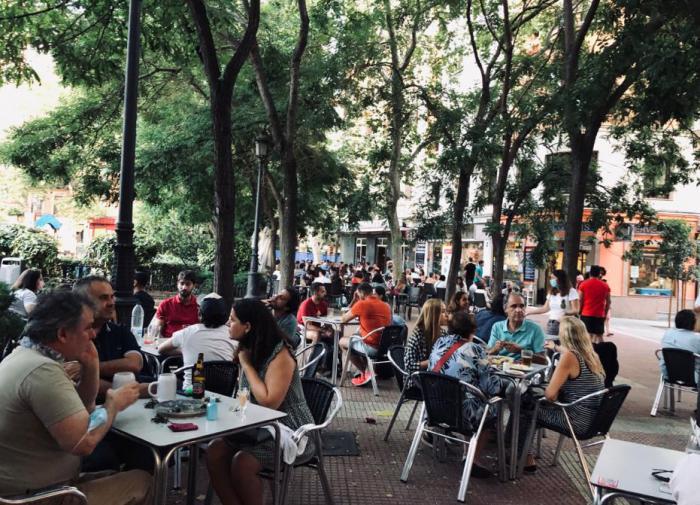
Madrid introduced social distancing, imposed masks regulations, a limited number of visitors, but rapidly reopened cinemas, gardens, galleries. Cafes are functioning, too, and so are the restaurants. Soon, after the summer holidays end, the city's theatres and concert halls will reopen.

It is not because the city is reckless. Not at all. Disinfectants are everywhere, and when walking or in public places, people are wearing masks. The streets of Madrid are meticulously clean. Various safety regulations are imposed. But life goes on. Airplanes are taking off towards many parts of the world. Madrid is an open city. Not yet to all, but at least to many.

And as a reward, there are smiles. There are politeness and kindness. People do not look suicidal. They do not explode at the slightest conflict. No honking, no shouting. No animalistic, all-consuming fear.

Madrid understands that there is a certain degree of danger. But it deals with this state of siege with admirable dignity and courage.

After the panic and ugly behavioral patterns that I observed in the United States and Chile, Madrid impressed me enormously. COVID pandemic brought economic and social hardship to some, but there was no national agony so clearly noticeable in New York, Washington D.C., or Santiago.

Even if they struggled, people made sure to put on their best, to behave with dignity, and confront danger with both strength and heart.

When my still weak feet let go on the third day, when I stumbled and fell on an ancient sidewalk, several people immediately ran to my rescue. They fought for me. In my own way, I came here in order to fight for them, too.

Madrid is not a perfect city. Actually, I keep repeating it again and again: there are no 'perfect cities' in this world.

And Madrid's way is not the only example of how to fight and defeat the latest deadly pandemic.

But perhaps it is the most agreeable one: full of smiles, support from friends and families, with the exposure to the sun, to excellent food, nature, culture, and arts.

It is the Latin spirit, joie de vivre, which is put to work here, in order to overpower Brueghel and his army of skeletons, together with the excessive religious asceticism of El Greco.

We still don't know how to defeat COVID-19, scientifically, but in such places as Madrid, we are learning how to prevent it from defeating us.

Nine days in Madrid did not fully 'cure me,' but it gave back the optimism to my scarred soul. It gave me the strength to fight again. As well as the desire to walk forward!

[First published by NEO - New Eastern Outlook - a journal of the Russian Academy of Sciences]

Let's block ads! (Why?)

Читать далее ...

India should listen to Putin's advice

2020/08/31

US senator Marco Rubio (Republican, Florida) is the Acting Chairman of the Senate Select Committee on Intelligence, Co-Chair of the Congressional Executive Commission on China and a member of the Senate Committee on Foreign Relations. He wrote an article in Nikkei Asian Review titled India should ignore Putin's offer to broker accord with China. He is trying to convince India that Putin is incapable of helping India, and he cannot be a mediator because he will not be neutral and will be tilted toward China. What  Rubio is trying to tell India is that Russia can no longer be a capable and a reliable friend of India and India should ally with America to confront and fight China. Basically, he wants India to give up its most time tested and trust worthy friend for a country that has always treated India as a potential adversary.

Rubio reminds of the story about King Solomon when he was able to find out who was the real mother of a child whom two women claimed to be theirs. King Solomon ordered that the baby should be cut in two pieces and divided between the two women. While the fake mother said that this was a good idea, the real mother said that the baby should not be cut into pieces and the other woman can have it. Russia is trying to save India from fighting a war with China that can prove disastrous for both countries. America wants India to fight China so that America can kill two birds with one stone; weaken its biggest adversary as well as its potential adversary. Russia sincerely wants to help India, a long time friend. We can look at the history of India-Russia and India-America relations since India's independence and this will become clear that who is India's true friend.

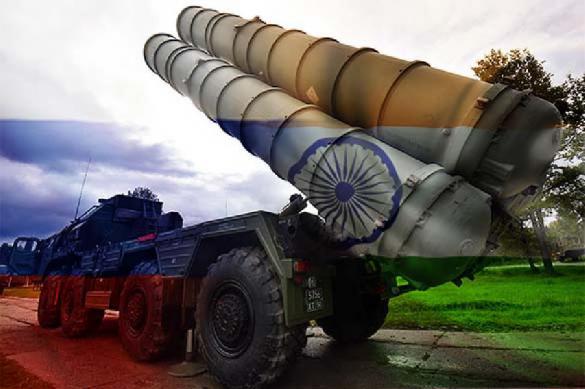
We can look at the voting pattern in the UN and this will become clear who stood up for India and who introduced resolutions against India. India and Russia have voted on the same side about 90% of the time, whereas India and America have voted on opposite sides most of the time. Russia had to veto anti India resolutions supported by America. Even today, about 60% of the heavy weaponry of the Indian army is of the Russian origin. Russia has always provided India with its latest and most advanced military technology. Whereas America has been very stringent as far as transfer of such technology is concerned.

America sent its seventh fleet against India during the 1971 Indo-Pak war. It was the Soviet Union that came in to help India. We should not forget the lessons of history, otherwise we will not be able to decide who are our time tested and trust worthy friends.

Some may argue that past history has become irrelevant  and now there is a convergence of American and Indian interests. However, even today, there is a fundamental difference in the American and the Indian interests. America wants to preserve the unipolar world order that is dominated by the only superpower in the world, America. Whereas both India and Russia want to change the present world order to a multipolar world, where no one country dominates the whole world.

True friendship can only exist among equals. America considers itself superior to others. This superiority is practiced under different names such as American exceptionalism and America first. I have no qualms about accepting that America is a great country. However, I feel uncomfortable when some Americans insist that America is the greatest. When you subscribe to the philosophy that America is superior to the others, then you cannot qualify to be a true friend because you are promoting inequality. Russia has never considered itself superior to the countries that it considers its friends. Russia has always considered India its friend.

India should listen to a true friend. India should recognize the gravity of the situation. The stakes are much higher than the 1962 war. India's survival as a country is at stake. We need all the sincere advice we can get. Instead of ignoring Putin, we should listen carefully to him and see what he has to offer. President Putin wants a trilateral meeting of the Indian Prime Minister Modi, the Russian President Putin and the Chinese President Xi Jinping on the sidelines of the upcoming G-20 meeting in October. We should never shut our doors to a diplomatic solution.

Whereas President Putin, as a sincere friend of India, wants India to have a realistic understanding of its conflict with China; America and the western countries, with ulterior motives, want India to overestimate its strength and underestimate China's strength. This approach can prove very dangerous for India because it increases the likelihood of a war between the two countries that the western countries will like to see. With this purpose in mind, America and the western countries have been engaged in the propaganda that India's economy is growing at much faster rate than China and is soon going to overtake China. This may happen, but it is going to take a long time.

At present, China's economy is about five times bigger than India's. According to some military experts, the difference in the military budget is even bigger. They feel that  China spends much more in real terms than the available figures. Therefore, at present, the two countries are not exactly equal in their strength. However, in terms of importance they are equal. China understands that America is its main adversary and a conflict with India will only strengthen its main opponent. Therefore, China wants an amicable settlement with India. President Putin is in a position to help both India and China. Russia, India and China share a common interest: to transform the present unipolar world into a multipolar world.                                              

Let's block ads! (Why?)

Читать далее ...