Putin wants God to be above the new Russian Constitution

2020/03/03

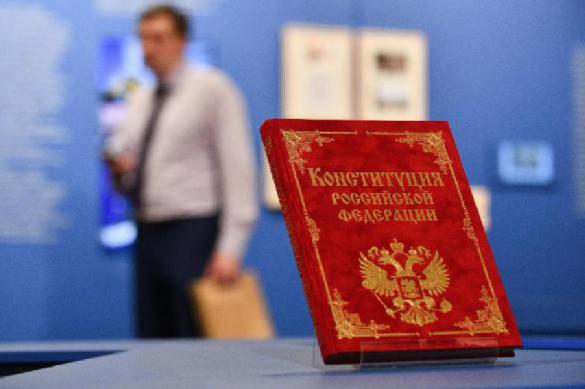
State Duma Speaker Vyacheslav Volodin and Vice-Speaker Pyotr Tolstoy unveiled a few details about the amendments, which President Vladimir Putin's submitted to the second reading of the bill to amend the Constitution of the Russian Federation.

They are to be considered in the second reading on March 10, and in the third - on March 11. Putin's amendments to the Constitution take 24 pages.

The amendments in particular include:

  •     the mentioning of God;
  •     provision on the inadmissibility of alienation of the territory of the Russian Federation;
  •     a ban for civil servants to hold foreign accounts and foreign citizenship;
  •     provision on marriage as a union of a man and a woman;
  •     provision on the Russian people as a state-forming people (also implies that the state language in the country is Russian, while the republics of the Russian Federation have the right to establish their languages);
  •     provision on the succession of the Russian Federation in relation to the USSR;
  •     provision establishing that the minimum wage should not be lower than the cost of living.

Putin also renamed the draft law on amending the Russian Constitution. Now the document is called "On improving the regulation of certain issues of the organization of the functioning of public authority" (formerly - "On improving regulation of certain issues of the organization of public authority").

Vladimir Putin initiated amending the Constitution during his Annual Address to the Federal Assembly on January 15, 2020. The president introduced the corresponding bill for consideration by the State Duma; it was passed during the first reading on January 23. The second reading is to take place on March 10th. On April 22, it is planned to hold a nationwide vote on the amendments.

Let's block ads! (Why?)

Читать далее ...

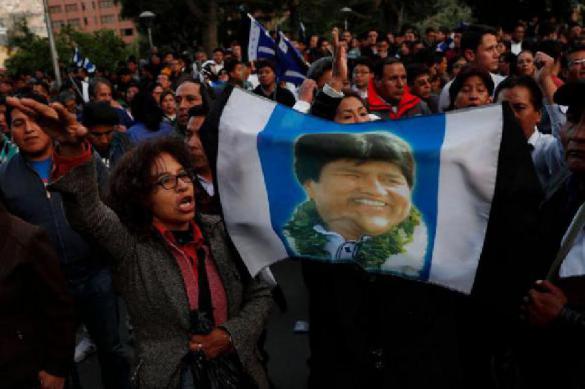
Evo Morales should sue USA and Trump for the color revolution

2020/03/03

Researchers from the Massachusetts Institute of Technology proved that there was no fraud during the presidential election in Bolivia last October, which suggests that the USA orchestrated a color revolution in Bolivia, a country that is an ally of Russia.

Victory of Evo Morales in the first round was legal

A new study published by the Massachusetts Institute of Technology (MIT) concludes that Evo Morales's victory in the first round was legitimate. The result contrasts sharply with the findings made by the Organization of American States (OAS) and comes contrary to remarks from US officials, who claimed that there was clear evidence of "deliberate manipulation" by the Morales government, which subsequently led to his resignation under pressure from the military and escape abroad.

According to the Bolivian election law, a candidate needs to win either by an absolute majority or gain at least 40% in order to win in the first round. However, in this case, the winner must be at least 10 percent ahead of the rival. Otherwise, the second round has to be arranged.

How Morales was toppled

In October 2019, during the electronic "quick counting" at 84% of the votes counted, the results showed that Morales was 8 points ahead of his closest rival Carlos Mesu. At this point, the election commission stopped updating the results for technical reasons (the system "froze").

When the counting resumed 24 hours later, the results showed that Morales was 10 points ahead of his opponent by 10 points. He could be declared the winner in the first round. The final official results showed that Morales won 10.5% against his rival.

While the election commission was processing the protocols, the OAS issued a statement expressing "deep concern" about the allegedly "hard-to-explain" leadership of Evo Morales after the quick vote count was suspended. The statement implied that the results were fraudulent. Foreign ministries of Colombia, Argentina, Brazil and the United States were quick to join the "concerns."

Commenting on the OAS statement, Western media around the world deliberately "confused" the quick calculation with the official results of protocol processing.

Protests erupted in the country, which eventually forced Morales to step down on November 10.

According to MIT, the analysis of the growth in the number of votes indicates a high probability that Morales exceeded the difference of 10 percentage points.

Morales' leadership did not grow sharply. It was actually steady and gradual. The increase was not hard-to-explain - it was quite predictable, given that the last results came from rural areas where Morales was especially popular, the researchers said.

In addition, the researchers conducted about 1,000 voting simulations to predict the final scenario, and concluded that Morales could have expected an advantage of at least 10.49 points against his direct competitor."

In a December interview with The Globe Post, Jake Johnston, an analyst at the Washington-based Center for Economic and Policy Research (CEPR), said that the OAS receives about 60 percent of its budget from the United States. Naturally, they had to work for that money accordingly, and so they did

The "color revolution," which the United States carried out in Bolivia under the cover of the OAS, led to weeks of violence, terror and unrest, which led to the toppling of the legitimately elected President Evo Morales.

At least 34 members of the electoral courts (commissions) were arrested for fraud in the following days.

The government of Jeanine Agnes that came to power afterwards - a little-known right-wing senator who declared herself acting president during short-term power vacuum - immediately endangered Russian-Bolivian projects. Agnes immediately joined the Lima group, which aims to remove Nicholas Maduro in Venezuela, where Russia also has significant financial interests.

Being an ally to the President of Venezuela, the Donald Trump administration saw Morales as a geopolitical opponent. Trump "welcomed" the toppling of Morales as "an important moment for democracy in the Western Hemisphere."

Morales Party to win upcoming elections

Morales was granted asylum in Argentina. Russia recognized Agnes, and, in fact, betrayed an ally, because Bolivia always voted as a non-permanent member of the Security Council for Russian resolutions, while Morales supported the independence of South Ossetia and Abkhazia and the "Crimean spring."

Evo Morales was the first president from the indigenous population of Bolivia, he made a significant economic growth possible during over almost 14 years in office.

His fourth presidential term, which was not stipulated by the Constitution, caused controversy, but, apparently, his party, Movement to Socialism, has not lost its influence among the population.

Bolivia is currently preparing for new elections on May 3. Recent opinion polls show that Luis Arce, a candidate from the party of Evo Morales, is far ahead of Agnes and other right-wing candidates.

The United States should be sued

Why don't Morales sue the Trump administration when he returns to power? Nicaragua used to sue the USA in 1984 for supporting the "Contras" after the toppling of dictator Anastasio Somoza.

In 1986, a UN court issued a verdict saying that the United States violated international legal obligations:

  •     not to interfere in the affairs of another state;
  •     not to use force against it;
  •     not to infringe on its sovereignty.

The court even awarded compensation to the Nicaraguan side, but the pro-US government that came to power in Nicaragua did not ask for it.

Let's block ads! (Why?)
Читать далее ...

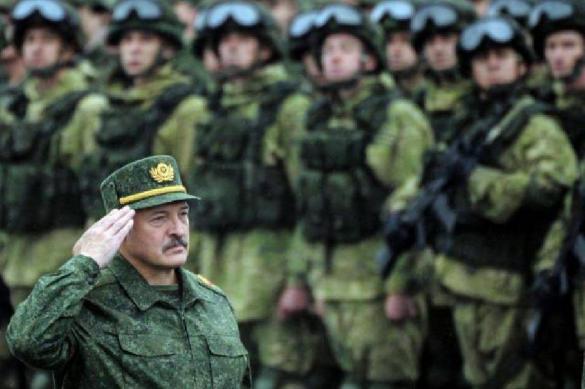
Belarus holds joint military drills with NATO to tease Russia

2020/03/02

In early March, Winter Partisan joint military exercises are to be held in Belarus with the participation of special forces of the UK and Belarus. A platoon of British soldiers - from 30 to 42 people - has already arrived in Belarus.

The purpose of these exercises is to practice "interaction to counter terrorism." It goes without saying that this decision of Belarus aimed at military integration with a NATO member country, namely Great Britain, came into the picture because of big politics.

In early February, Deputy Foreign Minister of Belarus Oleg Kravchenko spoke at a panel discussion at the Atlantic Council in Washington. The Atlantic Council is an expert and advisory platform for NATO that develops options for the eastward expansion of the alliance, as well as possible ways to "contain" Russia.

At the closed part of the discussion, Kravchenko told NATO experts that they should consider holding military exercises in Belarus with the participation of  EU NATO members. Since Belarus is a bridge between the West and the East, then this country is a place not only for Russian, but for American troops as well.

As part of the "multi-vector policy of Belarus," the deputy head of the Belarusian Foreign Ministry asked NATO to deploy up to a hundred of SOCMINT and OSINT specialists. In general, it goes about information troops, including those to monitor social networks, open sources and classic intelligence too.

The deal was finalized, and the decision to  military exercises was made. There is every reason to believe that NATO's information troops will soon appear in Belarus.

Belarus wants to be another Ukraine

As for the multi-vector policies of Belarus, the name of one of its architects is Vladimir Makei, the sitting Minister of Foreign Affairs of Belarus. This policy stipulates for cooperation and integration with both Russia and Western Europe, that is, with the EU and NATO, and, naturally, with the USA.

Such multi-vector policy ended up with Maidan riots, disintegration and civil war in Ukraine. It is not clear whether the Ukrainian scenario is in store for Belarus now.

According to opinion polls, people in Belarus are worried about the future of their country. They believe that revolution is the only way to change power in Belarus.

Against the background of the arrival of Western experts, one should recall that all those experts from various kinds of non-governmental European and American organizations have a passion for organizing "color revolutions." Alexander Lukashenko's regime is opening its doors for them already now.

Why is Lukashenko doing it? Apparently, he would like to get additional leverage over Russia. If Russia does not like to be accommodating on issues of oil prices or if she presses too hard on integration under the Treaty of the Union State, then Belarus can always bring up the "multi-vector" policy and "Western allies."

At the same time, if the "Western partners" start acting too violently, Belarus can always turn to Russia and ask for help. The question is whether Russia needs the brotherly nation that invites  British special forces.

Rumor has it that foreign military men will still take part in the Victory Parade in Belarus. This intention, if it is true, holds water, because the British were our allies during the Second World War. At the same time, it sounds like political challenge from the point of view of the current political situation in the relations between Russia and the West.

Not too long ago, Putin only had to give the Ukrainian economy a little shake with trade duties and taxes when Yanukovych started talking about "European integration." Needless to say that Belarus is heavily dependent on the Russian economy. If Russia shuts down its oil gas and other markets for Belarus, this country is doomed. Nevertheless, Moscow still spends money to support Lukashenko's regime: Belarus still pays the union state price for the Russian oil.

Let's block ads! (Why?)

Читать далее ...

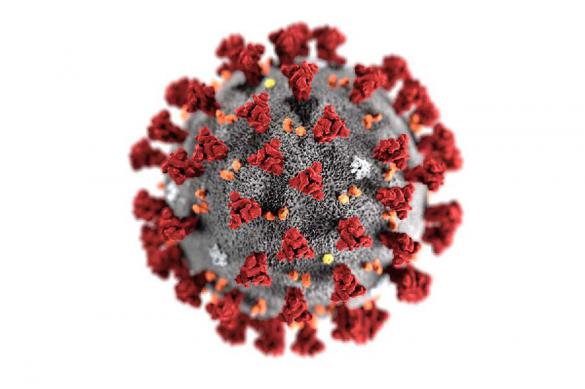
Coronavirus in Moscow: Situation goes out of control

2020/03/02

A Russian man, who arrived in Moscow from Italy, was diagnosed with the new coronavirus, representatives of the headquarters for Covid-19 monitoring and control said. The man remains in satisfactory condition.

"According to the epidemiological investigation, it was established that the young man fell ill on 02.21.2020 while on vacation in Italy," officials said.

He returned to Russia on February 23, and on February 27 he went to the clinic complaining of  symptoms of respiratory infection. From the polyclinic, the man was hospitalized to the infectious diseases hospital.

Most likely, it goes about David Berov, an employee of the Russian Football Union, who arrived in Moscow from Milan. The persons, with whom the man traveled to Italy and communicated with upon his return to Russia have been put under medical supervision either at hospitals or at homes.

It was reported, however, that coronavirus patients were accommodated at Moscow's Hospital for Infectious Diseases No.1 at general wards. It was said that the patients supposedly wear common protection masks and have to take all precaution measures themselves.

On February 29, Anna Popova, the Head of Rospotrebnadzor, called on all Russians not to travel abroad or reduce their stay abroad because of the outbreak of coronavirus infection. She recommended following basic rules for fighting the infection:

  • keep hands and all gadgets clean
  • rinse face and your nose during the day
  • wear a mask when visiting public places and when traveling in public transport.

At the same time, Popova said that there were no grounds for introducing mandatory quarantine for those arriving from Italy. "The country is large, and no one in the world has yet introduced such measures, there is no epidemiological basis for this either. One needs to go to the medical institution at one's place of residence, and you should be taken under medical supervision, " she said.

20,000 infected with coronavirus in Moscow

The Commissioner for Human Rights in Russia Tatyana Moskalkova urged everyone not to panic and not to spread rumors about the infection of 20,000 people in Moscow with coronavirus, which they supposedly silence not to disrupt the voting on amendments to the Russian Constitution. "If you are afraid and want to play it safe, go and take your children to the doctor," Moskalkova wrote on рук Instagram account.

Representatives for the Moscow headquarters for monitoring the situation with the spread of the coronavirus said that between January 24 and February 28, as many as 204 people were hospitalized with suspected coronavirus, but the virus was not confirmed with any of those patients.

Until recently, only two confirmed cases of coronavirus infection in Russia were reported: both patients were Chinese citizens, who received treatment and were discharged in February.

According to opinion polls, 33% of Russians are not afraid to become infected with the coronavirus, while 35% are rather not afraid. Only eleven percent of respondents said that they were concerned about the situation with the new dangerous infection.

To protect themselves from infection, those surveyed who are worried about their health said that they began to carefully watch their personal hygiene, they try not to go outside, reduce communication with others, buy antiviral drugs and stopped ordering goods from online stores in China.

Let's block ads! (Why?)

Читать далее ...

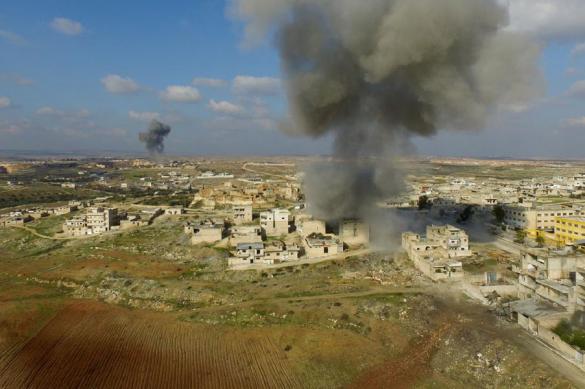
Russia refuses to guarantee safety for Turkish Air Force in Syria

2020/03/02

Russia can not guarantee the safety of Turkish military aviation in Syria after Damascus closes airspace over Idlib province, said Oleg Zhuravlev, head of the Center for the Reconciliation of the Warring Parties.

Zhuravlev said that the Syrian authorities had to make a decision to close airspace against the backdrop of the exacerbation of the crisis in the province. The news of the no-fly zone was announced on March 1, when Damascus said that any aircraft that violate airspace would be shot down as enemy aircraft.

Over the past day, the Turkish Armed Forces continued attacking the positions of the Syrian army in Idlib. Syria stated that Turkey thereby literally rescues terrorists from attacks by the Syrian army."

"This confirms Turkey's non-compliance with all the agreements that were reached earlier, including the Sochi accords," the statement said.

In Idlib, the Turkish military shot down two aircraft of the Syrian Air Force. The pilots ejected safely. Turkish attack drones strike even single targets of the Syrian military: cars, armored vehicles and motorcyclists.

The crisis in Idlib escalated in early February, when 14 Turkish citizens were killed in one week as a result of the actions of the Syrian army in Idlib. Turkish President Recep Tayyip Erdogan blamed not only Damascus, but also Moscow for their death and demanded Russia should stop the offensive of the Syrian pro-government forces in Idlib.

The withdrawal of the Syrian army was to take place before the end of February, otherwise Turkey promised to launch a full-scale military operation in Idlib.

As a result of the airstrike by the Syrian forces in Idlib province last Thursday, 33 Turkish troops were killed, after which Turkey officially declared Russia-supported Syrian troops as enemy targets.

  • The head of NATO condemned the indiscriminate air strikes of the Syrian forces in the province of Idlib and called on Russia and Syria to stop the offensive and respect international law.
  • Washington also urged to stop Syria and Russia.

Such a development may significantly slow down the ongoing peace process and undermine the military alliance of Turkey and the Russian Federation.

Let's block ads! (Why?)

Читать далее ...