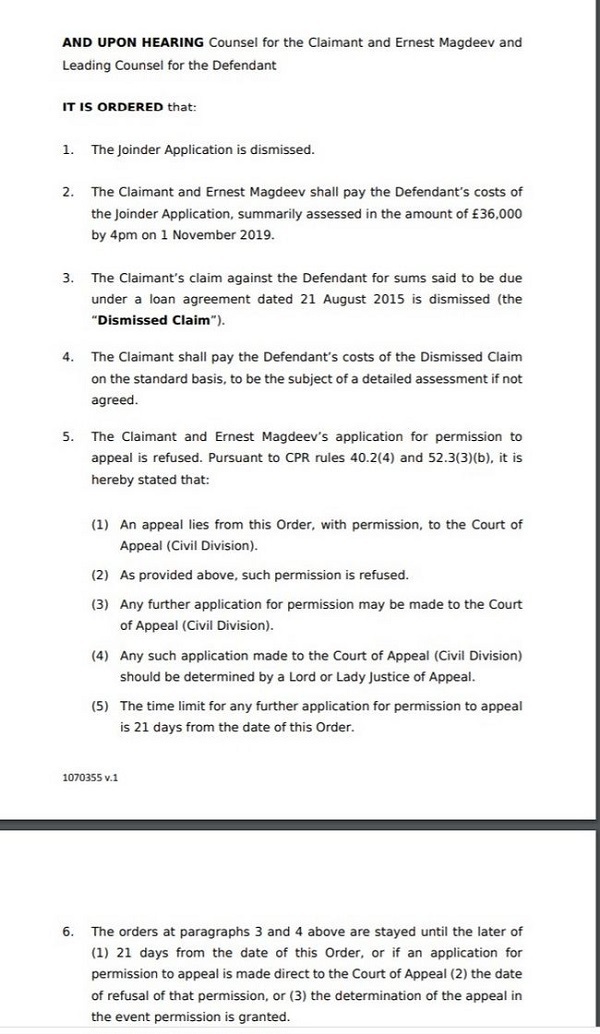
Nazism in Ukraine: Icing on the cake of Western hypocrisy

2020/01/27

Poland and Ukraine continue to square off with each other because of the Stepan Bandera banner that was hung for his 111th anniversary in Kiev. Earlier, Polish and Israeli ambassadors Bartosh Tsikhotsky and Joel Lion condemned the hanging of the Stepan Bandera banner by the Kiev City State Administration. Ukraine summoned the Polish ambassador and asked him "not to interfere into internal affairs of Ukraine."

Poland decided to formally establish equal responsibility of Nazi Germany and the Soviet Union for the outbreak of World War II.

Inna Novikova, Pravda.Ru editor-in-chief, talked about issues of Nazism in Ukraine in an interview with Vyacheslav Polosin, Doctor of Philosophy, Ph.D. in Politics, political scientist and Daria Mitina, Secretary of the United Communist Party of the Russian Federation.
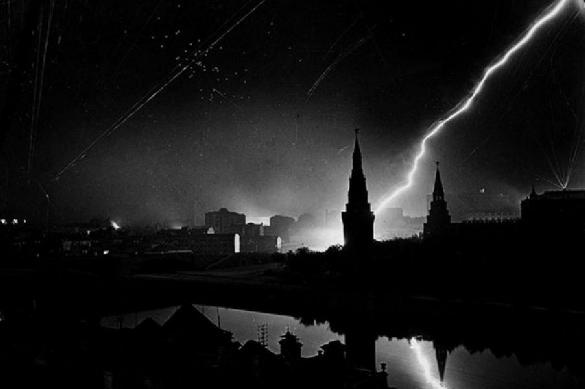
Nazism in Ukraine

"On January 1, Ukraine celebrated the birthday of Stepan Bandera, a Nazi accomplice and executioner his own people. Europe has always had a loyal approach to this issue, turning a blind eye to Nazi marches and saying that it was an internal affair of Ukraine. Not that long ago, Putin spoke on the subject. There were historical documents presented, including those confirming that a Polish ambassador pledged to erect a monument to Hitler if he could hope with the Jews."

Daria Mitina: "Indeed, the ambassador said that 70-80 years ago."

"The Polish Jews rushed to defend that ambassador saying that the story was different. However, Poland and Ukraine have their disagreement on the matter of the Bandera banner in Kiev and Poland expresses its concerns on a regular basis. Do you think this is just a tribute to the moment, or does Poland wants to remember its war victims? Can Poland show influence on Ukraine at this point?"

"Poland has never forgotten them. One needs to realize that the things that state officials say can be very different from the things that the people say."

"We are talking about the official position of the authorities."

"Well, Andrzej Duda has no complaints against Ukraine, nor does he ever recollect the Volyn massacre or any other similar stories in his public speeches. He is such an American puppet - he knows what he can say and what he should not say."

"But he is a national and patriotic figure in Poland."

"Yes, he is a  representative of the national Polish movement, but the key word here is "Polish."

Poland's role in Europe has always been very special. Today, one may say that Poland is a European office of the US State Department. To maintain this role, the Poles are ready to trample on their great Polish pride and forget such fresh wounds as the behavior of Ukrainian Nazis during WWII.

However, the diplomatic isolation, in which Ukraine finds itself, becomes stronger and stronger.

Originally, Hungary protested against the language policy in Ukraine, in particular against the Hungarian and Ruthenian population of Transcarpathia, etc. Now it is the Poles who loosen their tongue slowly but surely, other countries are also complaining.

The numbness of 2014, when everyone thought that the whole world would turn its back on Russia, is disappearing.

People begin to recall real stories from history, and common sense slowly begins to prevail, but this process is very, very slow.

A reminders of WWII is a reason to think

Putin's remarks about the Polish ambassador became a cold shower to many. People started thinking, they started recollecting. Many did not even know that story about the Polish ambassador - it became a revelation to many people. In general, Putin's remarks on the subject mean that one should revisit the history of World War Two.

I personally believe that common sense about Ukrainian Nazism will prevail in about ten years. From the point of view of history, ten years is like ten days. However, given the current state of affairs in Ukraine and in independent republics of the Donbass, this is a very long period of time. Millions of people are forced to live in this atmosphere of permanent terror and suppression of dissent. A a lot of bloody and tragic events have already happened in Ukraine in five years, and a lot more will happen in ten years. Therefore, one needs to talk about it as often as possible. Ukraine expressed its protest about "Volynia" - a new Polish film that many in Europe have had a chance to watch. The film was banned in a number of countries, because they received instructions from across the ocean not to develop the anti-Ukrainian topic.

However, I am convinced that the truth will always find a path, it is just a question of time and the price that we have to pay for this."

"The question is about the people who misinterprets history and wants others to think their own way. The leaders of many small countries hold US passports and US diplomas. All major mass media outlets are not independent either."

Vyacheslav Polosin: "Modern people forget about the role of Stepan Bandera, about his attitude towards the Poles and the Jews. The Western propaganda machine wants to sweep all this under the carpet, so Putin's remarks about the Polish ambassador came as something extremely extraordinary. Needles to say that such stories should never be kept secret in any democratic society in the world. If people make movies and show them in cinemas, then other people get a chance to see the historical truth. If such movies are banned in some countries, then it's no democracy, but a totalitarian regime. After all, people can get all this via the Internet.

Who started WWII? Who should be responsible?

We must also pay attention to the official decision of the Polish parliament to establish equal responsibility of Nazi Germany and the Soviet Union for the outbreak of World War II. There some inconsistency in this decision.

Of course, if we take the secret protocol to the Molotov-Ribbentrop Pact, then one may come to such a conclusion indeed. However, the document does not read: "Start the Second World War now!" In general, Germany's attack on Poland was not qualified as an outbreak of World War II.

Before that, in 1938, Poland took part in the dissection of Czechoslovakia. All Western countries, approved that and no one could not believe that it would be a start to the Second World War. In general, there is no specific date - any historically significant date of that period could be seen as such: 1938, or even 1936 in Spain - there were many of such local treaties concluded with the help of which different countries tried to regulate certain moot questions and secure themselves.

The Soviet Union was also looking for ways to secure itself. One should not see this wish as a desire to conquer the whole world or all of Europe. Hitler wanted to fight and conquer, one can clearly see it in "Mein Kampf," but the Soviet Union had no such intention at all. From this perspective, USSR's equal responsibility for the outbreak of WWII does not make any sense. One should not forget that Poland became larger as a result of USSR's victory over Nazi Germany.
Let's block ads! (Why?)

Читать далее ...

There is one big, profound difference between USA and Russia

2020/01/27

Having killed Iranian General Qaseem Soleimani, US President Donald Trump was hoping to strengthen his position before the election. However, it appears that Trump has played not only against Iran, but against himself too.

In general, this applies to the United States as a whole, because the presence of US military in foreign countries causes an outburst of anti-American sentiments there. The Americans have become the greatest enemy of the Americans. Why did it happen?

Lyuba Lulko (Stepushova), an international observer of Pravda.Ru, talked about it in an interview with Valery Garbuzov, the director of the Institute of the USA and Canada of the Russian Academy of Sciences.

US-led policy in the Middle East

"Mr. Garbuzov, do you think that the Iranian authorities hope that Trump will lose the election, a Democrat will take office as new president and then something will change?"

"You know, many pray for Trump to lose the election."

"They do not have any other hope in Iran."

"Indeed, but the policy of the United States in relation to the countries in the Middle East has not been the same:

  • Barack Obama tried to mend USA's relations with the Arab world, and he was running a policy towards Israel, which Israel did not like very much.
  • These days, with Trump serving as president, a lot has changed. Trump is doing the opposite. He began aggravating relations with the Arab world and banked on Israel. He even recognized Jerusalem as the capital of Israel, although no one could not even imagine that this could happen. Yet, Trump made it happen out of the blue, and that move exacerbated the state of affairs in this region of the world even further.
  • One may assume that if a Republican moves into the White House, let alone a Democrat, the United States will change or adjust its policy in the Middle East again - it will not be so explicitly pro-Israeli. Most likely, the new policy will be aimed at maneuvering in this region, because it is simply impossible to act there in a different way.

Rise in anti-American sentiment

"Otherwise, the United States will have to leave the region, because the Americans have become a thorn in the side even for their allies in the region."

"But the United States maintains military presence in other countries of the world."

"USA's presence in different parts of the world causes mixed reactions It raises anti-American sentiments in most cases. This is a classic reaction.

In the Middle East, anti-American sentiment is running high. They despise the USA in the Middle East. In general, the USA needs to think of ways to restructure its policies in the Middle East, but the USA has been acting in a very rude and straightforward manner, especially recently. As a matter of fact, no other country, not even China, acts like that now.

China, perhaps, has learned most lessons from the American policy of globalism. It seems to me that the Americans are making their own sworn enemy out of themselves.

USA and USSR: The big difference

"Does it remind you the Gorbachev time, when the Soviet Union fell apart because we could not come up with something new to change the system?"

"There is one big and profound difference between the USA and the USSR.

When the American leadership does something wrong, makes mistakes, makes completely obvious mistakes, intentional or unintentional ones, then there is always a clear and fairly simple way out - to re-elect the president. People go to the polls to elect their new president every four years, and no one can change it. Nothing can change it - not even a war or a natural disaster. If Trump has made many serious mistakes, then the Americans have an opportunity to replace him. Yet, he can keep his place in the White House. If the American society Yes, he might stay in the White House, or he might not. And if you cannot replace it, then the American society needs to question its own nature.

"For some reason, when we have a similar situation in Russia, when we don't like what our president does, we cannot replace him with any other president due to different circumstances.

This, of course, is our big problem and our big mistake.

The worst thing about the foreign policy in the United States is that the shortcomings of their foreign policy behavior get conserved. The Americans do not need that at all, because it causes a wave of anti-American sentiment.

"Are you talking about a matter of internal political struggle, or is it manifestation of discontent of the common people? Or is it a power struggle?"

"Many people think that this is a matter of struggle of the US political elite, and in fact this is all true. However, it does not mean that the masses do not take part in this struggle. There is no other country in the world, where the electorate would be more involved in the political process. When they say that the Americans vote to elect their president, they really mean it.

The president of the United States of America is the president of the American people.

Of course, the political elite plays a very big role in all this, but it is not the elite alone. If it were only for the political elite to say its decisive word, Trump would never be elected. He would never become president, because the entire elite was against him. It was the people, who came to realize that globalization was bringing them big problems, so they went to vote for Trump in a hope that he would be able to solve these problems.

Let's block ads! (Why?)

Читать далее ...

What is wrong with the shooting down of flight Ukraine International Airlines 752

2020/01/26

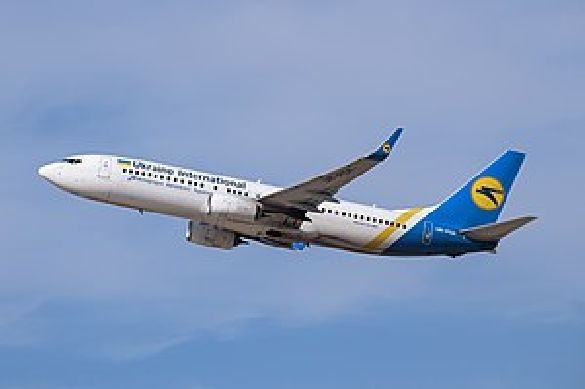
Iran will not easily forget the dawn of January 8, 2020. Maybe it never will. Revenge for General Qassem Soleimani was not washed by the blood of American soldiers in the Middle East, but by that of the passengers and crew members of the flight Ukraine International Airlines 752, which left Tehran-Imam Khomeini international airport and shot down by a missile just minutes from takeoff.

by Lorenzo Vita & Paolo Mauri

A disaster that immediately appeared something different from a tragic fatality. The timing of the incident, precisely on the night when Iran launched its operation against two US bases, foreshadowed something different. And so it was. After the first news on the fall of the Ukrainian flight and the first accusations made by western intelligence, Iran has admitted it: that Boeing 737 departed from Tehran had actually been shot down by the anti-aircraft defence. A tragic mistake due to the exchange of the civilian plane that left Imam Khomeini airport for an enemy military plane or missile.

The admission of guilt by the Iranian government - which came with the condolences of Hassan Rouhani and Mohamed Zarif and with the dramatic confession of the commander of the Pasdaran aerospace forces, General Amir Ali Hajizadeh - did not however silence any questions. Something, on that endless night in Tehran, remains unclear.

The missile that hit Boeing

According to reports in the press - and never denied by Tehran - two Russian-made 9K330 missiles of the Tor-M1 mobile air defense system were to shoot down the Ukrainian Boeing. As can also be seen from the video [1], two missile trails can be distinguished at 21 seconds from each other: a time factor to which we will then return.

Iran purchased 29 specimens of Tor-M1 (Sa-15 "Gauntlet" in NATO code) in 2006. The system is used for short / medium range air defense having the ability to engage radar targets up to a distance of 25/30 kilometers and to hit them at a maximum distance of 12, with a range of engagement from ten to 6 thousand meters.

The 9K330 missile, which is used by the Tor-M1, is radar-guided with a proximity spool. This means that it heads towards the target thanks to the radar and that its warhead does not explode on contact but at a predetermined distance. When launched, it rises vertically up to an altitude of about 20 meters, and then leans, thanks to the jets, and heads towards the target. Its safety distance, i.e. the minimum distance beyond which the missile is active, is 1500 meters.

Times and distances: there' something wrong

Everything suggests that the Iranian version is correct. However, according to the missile data, in the video (so far one of the rare "direct" sources to explain the mystery) there is something that does not coincide perfectly. And it is appropriate to analyze it to understand if a second theory actually exists in addition to the tragic decision of an Iranian soldier.

Both missiles are not seen starting vertically first - but this could only be a perspective factor - but above all the sequence shows the first missile hitting the aircraft, followed only 21 seconds later by the second: the fatal one.

A particular dynamic to which is added another node that can be decisive. Assuming that the missiles were actually fired from the military base near the airport, the second missile would have hit the aircraft at a distance that is less than the minimum safe distance for the activation of the warhead of the missile with which it is armed the Tor.

All sources [2] agree that the 737 was flying at a height of around 2400 meters above sea level, which is more than enough distance for the missile to "arm itself". However, the height from land must be subtracted from this altitude. And Tehran is located about a thousand meters above sea level. So the actual altitude of Ukrainian Airlines Boeing from the ground was around 1300 meters. If the first missile hits the aircraft at a distance between 2700 and 3300 meters from the presumed launch point, therefore beyond the safety threshold, the second - which arrives 21 seconds later - appears to be below this threshold as highlighted from the reconstruction of the route held by Boeing.

The same interval of time elapsed between the first launch and the second is long for the tactics used in the use of the Tor system: after the first missile the other is usually launched a few seconds later to perform a deadly 1-2 on the target. 21 seconds is too long.

A manpad? Everything would change

At this point, we can reflect on a second option. Premising that these are hypotheses based on the analysis of sources accessible to all. Black boxes and real data are being investigated by investigators.

Iran has a number of portable surface-to-air devices, the so-called manpad, capable of being operated by one man, who have flight profiles and safety devices that best adapt to what is seen in the video. In particular, Iran has an unknown number of Strela M-2, Strela 3, Igla-S, Misagh-1 and 2 and apparently also some Stinger left over from the supplies obtained illegally from the United States (affair Iran-Contra) during the Iran-Iraq war of the 1980s.

The famous 21 seconds spent between one missile and another are more than enough to make a second launch of a manpad from the same device or from a second once, on sight, you realized that the plane was still in conditions of flying. Moreover, this theory would be better suited to explaining how it was possible that the operators of the Tor-M1 system, which is inserted in the Iranian anti-aircraft "defensive belt", could have exchanged a civilian aircraft, equipped with a regular transponder, for a military target.

A disturbing scenario

Of course it is difficult, with the means available, to find the truth. And maybe it will be impossible. However, what is certain is that something happened that night in Tehran. Because what started with the murder of Soleimani is a movement of accusations, counter-accusations, threats and appointments which suggests that something is changing in the upper echelons of the Islamic Republic and the Guardians of the Revolution.

The killing of Soleimani, a man who was considered a loyalist to Ali Khamenei, marked a clear turning point in Tehran's strategy in the Middle East. Esmail Ghaani, Soleimani's deputy and new Quds leader, is a system man who many consider much less autonomous than his predecessor and much closer to the hard wing. The Supreme Guide chose Ghaani in the wake of continuity: but in reality his appointment goes beyond mere bureaucratic replacement. And in the meantime, General Hajizadeh's assumption of responsibility discredits the head of the most important force of the Pasdaran's strategy after the Quds, that aerospace force that guides the missile program.

The political earthquake that arose with the killing of Soleimani, continued with the desire for revenge and ended (for now) with the sermon of Ali Khamenei in the Friday prayer (first time after eight years) indicates that something is changing in the system of the Islamic Republic . Even the images of Rouhani abandoning the prayer behind Khamenei [3] before the end of the services, with the amazed gaze of the president of parliament, Ali Larijani, could be the signal of the fracture. The Supreme Guide sermon is never just any sermon: and the words used by the Ayatollah have been fiery towards the world.

A fracture that clearly grafted onto the doubts of a plane crash that appears to be increasingly full of mysteries.

If was not a Tor system but a manpad - thus trying to contradict the universally accepted theory - then someone has taken up that weapon and fired. Who and on whose behalf it is impossible to understand but would certainly surround the sort of mini-revolution that the establishment of the Republic is witnessing. But about the why this flight was chosen, there are many hypotheses and none certainties.

What is sure is that the plane was not supposed to leave on a night of missile raids, as commandant Hajizadeh had ordered. But that order remained unheeded at Tehran airport: so much so that the Boeing, received the ok from the control tower, got up regularly in flight without receiving any contraindications.

Another mystery is that the Revolutionary Guard, which has a base right near Khomeini airport, may have made a mistake so clumsy that it swapped an airliner taking off from an airport a few kilometers away with an enemy aircraft. The radars of a system such as the Iranian anti-aircraft could not make such an error and a soldier is not alone in activating the missiles: there is a battery. The third mystery, which can only be touched upon, is to understand if behind the destruction of an airplane there is not only an internal struggle but also the will to hit precisely that airplane.

Mysteries that are likely to remain so. But if it wasn't a Tor error, the idea is that someone wanted to shake the system. To understand whether from inside or outside.

For now, with the investigations still ongoing and giving the "official" version for sure, at least one result seems clear, namely the weakening of some key figures in Iranian politics, Rouhani and Zarif in the first place. Those who are negotiating the new nuclear program deal in secret rooms.

[1] https://ift.tt/2Ns3tH7

[2] https://ift.tt/37wqq3Z

[3] https://www.youtube.com/watch?v=MMjrwtFixNA

**********************

Original column by Lorenzo Vita & Paolo Mauri:

https://ift.tt/2RU3dC2

Translation by Costantino Ceoldo

Let's block ads! (Why?)

Читать далее ...

Those who spill Putin’s beans in corporate Russia have to go

2020/01/24

The government of Dmitry Medvedev has resigned. Medvedev failed to meet the requirements of many of Putin's decrees, but Putin takes every effort to make the lives of former governmental officials comfortable by moving them to other high-ranking positions. Is there any place for the feeling for patriotism?


The Unknown Putin

And Medvedev's government goes to...

It became known that:

  • ex-Prime Minister Dmitry Medvedev will work at the Security Council of the Russian Federation. There was a new position established especially for him - deputy chairman of the Security Council. Medvedev will thus deal with issues of improving the defense capability and security of the Russian Federation. Frankly speaking, security officials can hardly be happy to see Medvedev in their ranks.  
  • Maxim Topilin, the former Minister of Labor and Social Protection, who "defended" Russian pensioners by raising the retirement age, became ... the head of the Pension Fund. The former head of the Pension Fund, billionaire Anton Drozdov, who could not find any funds to index pensions for working pensioners for 4 years, was appointed to the position of Deputy Minister of Finance. The money to raise pensions for working pensioners was quickly found now.
  • Veronika Skvortsova, the former Minister of Health, who was unaware of the amount of real salaries of doctors in Russia, took the position of the head of the Federal Medical and Biological Agency. In other words, having failed in the field of primary health care, her new duty is to control it.
  • Vitaly Mutko, who was responsible for construction and housing in Medvede's government, could never manage to put things in order in both of those spheres. Moreover, when Mutko served on his previous position of the Minister for Sports, the doping scandal started. According to Grigory Rodchenkov, it was Mutko who was coordinating the substitution of samples with him. According to RBC, Mutko may take the post of the head of the state-owned investment company Dom.rf.
  • For ex-Minister of Culture Vladimir Medinsky, Putin personally promised to find a good place. He was appointed assistant to the president for culture, that is, he will become the curator of the industry.
  • The former head of the Ministry for Economic Development, Maxim Oreshkin, was appointed to a similar position.
  • Former Deputy Prime Minister Dmitry Kozak, who was responsible for economic cooperation with Ukraine, also failed on his job. Yet, he found common language with Ukrainian officials, after Russia signed an extremely disadvantageous gas transit contract. Kozak was appointed deputy head of the presidential administration. One shall assume that the shadow cabinet will make Ukraine feel even better.

How can one love a country ruled by immoral officials?

Putin did not say why those people would not work in the new government. On the contrary, he thanked them for "macroeconomic stability", but said nothing about the microeconomic stability.

At the same time, it is not clear why Finance Minister Anton Siluanov is still in the office, because it was him, who, together with chairwoman of the Central Bank Elvira Nabiullina, crushed the economy with a system of unaffordable crediting and money supply restrictions.

Why does Denis Manturov, the Minister of Industry, keep his post as well, even though he failed the Superjet project and ruined the domestic aircraft-building industry?

There are other, more important questions left.

Why don't the "resigned" officials, who were basically dismissed for their professional ineptitude, bother to get new jobs for themselves? After all, ordinary citizens do it themselves. What kind of patriotism should the Russians have if Russian officials behave in a very rude way with people, they plunder the people and intend to do the same on their new posts?

Russia as a corporate state

Political analyst Dmitry Oreshkin told Pravda.Ru that Russia was turning into a corporate state that takes care of corporate people. An official as a member of the corporation knows a lot indeed and if he leaves one corporation for another, a competing one, he takes his knowledge there.

The model of Putin's state contains elements of corrupted loyalty, the expert added. Loyal people are allowed to receive profitable contracts or other advantages.

"Putin can not let these people go, because, firstly, they know too much. They can spill the beans, like Grigory Rodchenkov did, or join the opposition, like Mikhail) Kasyanov did. Therefore, Putin needs to soft-pedal on them, to give them an opportunity to work within the framework of the system, where they will not be able to cause the system any harm," Dmitry Oreshkin said.

For example, ex-Prosecutor General Yuri Chaika was moved to the North Caucasus Federal District as the head of this district, and "this post has very mysterious functions."

"He has the mechanism, he has a budget, but this is only for this mechanism. However, if the Kremlin needs something, they speak to the head of the region, rather than to the head of the federal district. In a nutshell, there are plenty of jobs for mediocre people in Russia who will look pretty good there," said Dmitry Oreshkin.

The state of officials was created in the Soviet Union

In a sense, such posts are an administrative pension.

"If you kick them out, well, Stalin used to destroy those who knew too much, because they could destroy the image of Stalin," the political scientist said.

According to him, senior Soviet officials would be deprived of the opportunity to talk about something significant. For example, Khrushchev used to send Zhukov in exile. They could still work, but they were not allowed to say anything.

Brezhnev, he added, gave Khrushchev an opportunity to write memoirs on the subject that were of concern to the Soviet authorities of that time. Putin is trying to prevent this by ensuring the loyalty of senior officials of the state by transferring them to other posts within the state "corporation."

Do Western officials abide by law at all times?

In the United States, Dmitry Oreshkin said, officials receive pension in accordance with the federal law. However, this is quite small a pension, just like president's salary. They set up various funds to secure themselves financially.

"There is no such corporate state in the US system. For example, Henry Kissinger, after leaving the civil service, became a member of the board of directors of a large consulting company and was making good money at Booz Allen Hamilton. He had the so-called GR (Government Relations) expertise. They paid him well, but no one was trying to shut his mouth, because he was not serving the US corporation - he was serving the US law," said Dmitry Oreshkin.

According to him, even the Russian Empire did not have such a thing as state corporation - this phenomenon was born during the times of the Soviet Union.

Let's block ads! (Why?)

Читать далее ...

The Graff conflict: Dmitry Tsvetkov wins first trial

2020/01/24

The court process between business partners, which was caused by disagreements about the Graff Diamonds store in Cyprus, lasted for several years. The first stage of the trial has recently ended in a London court, but the outcome of it was not in favor of plaintiff Rustem Magdeev, who seeks a compensation from his partner, Dmitry Tsvetkov. This week, the proceedings in the UK Commercial Court of the High Court of Justice continued. It is obvious that this process, which may seem insignificant in terms of the money involved, will have a great impact on its participants and on those individuals, whose names were voiced in London.

The story of the conflict 

Graff, an expensive jewelry store, was opened on the island of Cyprus in 2014 by three business partners: Dmitry Tsvetkov, Rustem Magdeev and Emil Gainulin. According to The Times, three years later, Rustem Magdeev filed a lawsuit against Dmitry Tsvetkov at the High Court of Justice, claiming that the partner should pay him back a loan worth £12.1 million.

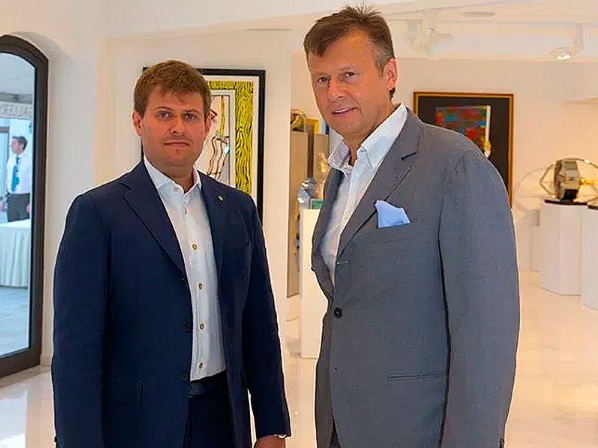
Tsvetkov filed a counterclaim, in which he accused the businessmen of extortion, but also of attempted hostile takeover of the business. According to Dmitry, Gainulin withdrew about £47 million from the store, while Magdeev caused a damage worth £3.7 million, having disrupted  the sale of a 40-carat diamond. In order to put pressure on Tsvetkov, Magdeev flew to Cyprus in 2017 in the company of well-known criminal authority Radik Yusupov, nicknamed "Dragon." Shortly before the trip, Yusupov was released on parole from a penal colony, where he was serving a sentence for organizing a series of murders. Noteworthy, Yusupov pleaded guilty, which gave him the right to be released on parole even under articles of the Criminal Code that entail heavy punishment.

The Graff conflict: Dmitry Tsvetkov wins first trial. 63994.jpeg

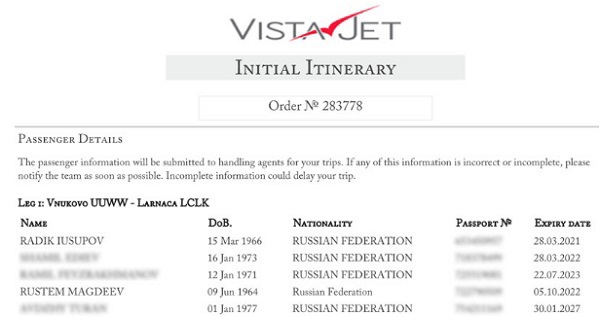
The flight list

The well-informed Polit.ru website, which published the flight list of a private jet from Moscow to Larnaca, on which the names of Magdeev and Yusupov appear, believes that Rustem Magdeev used to be a member of an organized criminal group. In his youth, Magdeev was nicknamed "Broiler." It appears, however, that Dmitry Tsvetkov learned all this information as a result of an extended meeting of Graff partners with the participation of Radik "Dragon" Yusupov. In addition, it became known during the conflict that Magdeev did not invest his own money in the Graff boutique - he used the funds of the President of Tatarstan, Rustam Minnikhanov. Magdeev has personally informed Tsvetkov about it (the Versia national newspaper quoted him accordingly). In addition, this information was voiced in the courtroom in the UK.

Magdeev had indeed served an adviser to Minnikhanov in the past and continues to maintain public contacts. To crown it all, primary business interests of the Magdeev family are located in Tatarstan.


It was Dmitry Tsvetkov that Graff originally worked with. It was Tsvetkov who received the franchise management in Cyprus from François Graff, chairman of the board of directors of the jewelry company, via the Cypriot company Equix Group Ltd. However, as soon as information about the conflict between the entrepreneurs emerged, after the names as Minnikhanov and Yusupov became associated with Graff, having brought the smell of crime and corruption, he terminated his cooperation with Equix.

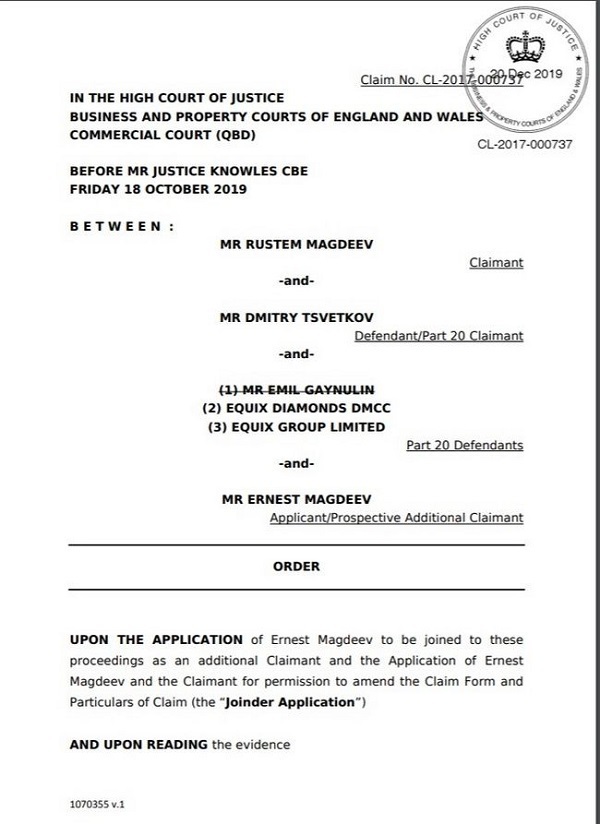
Rustem Magdeev is acting to collect 12.1 million pounds ($15 million) from Dmitry Tsvetkov. Magdeev refers to the agreement from 2014, which he concluded with EK Diamonds DMCC, a company from the United Arab Emirates, the owner of which was Emil Gainulin. In accordance with the document, Dmitry Tsvetkov was the guarantor. Ernest Magdeev, the son of Rustem, later filed a lawsuit, and Tsvetkov filed counterclaims.

In the fall of 2019, the Commercial Court of the High Court of Great Britain sided with Dmitry Tsvetkov and ordered the Magdeevs, the son and the father, to pay Dmitry Tsvetkov £36,000 in legal costs, as well as to compensate for other expenses, the amount of which may reach several hundreds of thousands of pounds. The court denied the appeal to both of the Magdeevs. The first ruling concerned the claims totaling about $5 million. This week, a second trial of the same lawsuits began in London with the claims worth $10 million pending.

Military secrets and non-transparent assets in the Graff case

Many Russian businessmen choose London to sort things out between themselves. It is generally believed that the judicial system in the UK is impartial and has a meticulous approach to any conflict, considering it from all sides, without amendments to the "telephone law" and financial viability of the parties. The most explosive case was the trial of Abramovich and Berezovsky, which the latter lost, despite his political proximity to the British authorities (Boris Berezovsky was granted asylum and protection in UK for politically motivated reasons). In the case of Graff, the choice of jurisdiction was primarily determined by the citizenship of Dmitry Tsvetkov and partly because of the legal affiliation of Graff jewelry company - this is a British legal entity.

The impartiality of the British legal system may play a bad trick on Rustem Magdeev. He lost without the right to appeal, as it happened at the first stage of the process at the end of the last year. It goes about the document called an "unexplained wealth order (UWO)." Two years ago, the British authorities launched Criminal Finances Act: UWO and decided to seize assets and property of foreign citizens, who could not clearly explain the origin of their wealth.

More than $90 billion is laundered in the UK every year, and authorities see it as a national threat.

In accordance with the Criminal Finances Act 2018, the authorities may demand an explanation to explain the origin of £50,000 at least. UK National Crime Agency considers wealthy Russian as risky community, according to the Financial Times. As TASS wrote, the UK already issued first UWOs against Russian citizens. Given the publicity of the process around Graff in London, one may assume that Rustem Magdeev will be at risk. It was said during the trial that the millions, which Magdeev invested in Graff's business in Cyprus belonged to a federal Russian top official, Rustam Minnikhanov. This detail alone is enough to initiate an investigation into Magdeev. It just so happens that his funds can be defined as "assets of unknown origin," let alone the fact that there is only one thing hiding behind the concept of "funds of Russian top official" - corruption. The UK authorities are happy to arrest any corrupt capital to add it to the nation's treasury. Quite possibly, though, Magdeev does not have either real estate in London or accounts with British banks. However, this could be cold comfort in the event the authorities issue an unexplained wealth order for assets of unknown origin against Rustem and Ernest Magdeev. The latter is a Swiss citizen. In Switzerland, the Magdeevs have not only real estate, but also bank accounts. Rustem Magdeev holds a Cypriot passport, and Cyprus, as is well-known, used to be part of the British Empire. To crown it all, the law of the island state is based on the British legal system. It is clear that the British order against Magdeev will prompt the authorities in other countries to inquire about the origin of his assets too.

In addition, Magdeev and Tsvetkov litigate in Cyprus for another matter that goes about the shares of a military R&D/production company based in Kazan - OKB named after Simonov (Simonov Design Bureau). A District Court of Limassol of Cyprus arrested Rustem Magdeev's multi-million-dollar property in order to secure the claim. In Cyprus it goes about $1.3 million, and the story is complicated there too. Alexander Gomzin, the general director of the OKB, around which there is a dispute between Magdeev and Tsvetkov, was arrested in Kazan, the capital of Tatarstan, where Rustam Minnikhanov serves as president. Earlier, Gomzin reported to the FSB (Russian intelligence service) about an attempt of Israeli services to recruit him at the behest of Magdeev, who was a co-owner of the OKB through a chain of companies. The attempt to recruit Gomzin was made during the presentation of the Graff boutique ... in Cyprus. For many years, the OKB was engaged in the development of the project of a heavy unmanned military aircraft for the Defense Ministry of the Russian Federation. Needless to say that all this information will surface at a British High Court sooner or later.

Money pipeline from Russia to Cyprus

Apparently, Emil Gainulin, Graff's third partner in Cyprus, another active participant in the arbitration process in London, will not be able to sleep peacefully after public hearings in London either. Gainulin has recently faced serious problems in Singapore, where tens of millions of dollars were frozen in his personal accounts. The Versia newspaper gave a detailed insight into Gainulin's and Magdeev's problems in its investigation ("Little People of the Laundromat").

In particular, journalists exposed Gainulin's letter to Rothschilds' bank, in which he is trying to explain the origin of hundreds of millions of dollars. The Versia analyzed tax statements from Emil Gainulin's main asset - the company Podvodtruboprovodstroy, a major contractor of Gazprom and Transneft giants. Gainullin controls 46 percent of the company, while the second half is controlled by Mikhail Turetsky, who known as "Moysha" in Lyubertsy's criminal circles. In 2012-2015, Gainulin's company earned a net profit of more than 450 million rubles (about $13 million, at the exchange rate of those years) with a turnover of more than 30 billion rubles (about $900 million). At the same time, in his letter to Banque Edmond de Rothschild, Emil Gainulin reported his annual income received from the activities of Podvodruboprovodstroi in the amount of ... $60-75 million.

In other words, Gainulin declared in writing that he received the income of more than $250 million from his asset in Russia, while the asset had a net profit of only $13 million for the same period. It does not seem surprising that bankers regarded such activities as suspicious and related to large-scale money laundering in especially huge sizes.

In 2019, the Singapore branch of Standard Chartered Bank sent a letter to Emil Gainulin and his wife stating that he was no longer interested in continuing relations with them due to significant violations of the money laundering law. Singapore used to be a British colony too, by the way. 

It just so happens that Emil Gainulin invested in Graff the money that fit into the British Criminal Finances Act 2018. The fact that this money was invested in Cyprus through the countries of the Middle East will be just an insignificant detail. It was British company Graff Diamonds that received the money from investments of "unknown origin" aka laundered - this will be an important detail, which may cause a domino effect throughout Europe and beyond. In this regard, the victory of Dmitry Tsvetkov in the UK Commercial Court of the High Court without the right to appeal against plaintiffs, the Magdeevs, is not just a triumph of justice - it opens up the opportunity for the British authorities to start investigating into the assets of the Magdeevs and the Gainulins.

First reaction

The Graff conflict: Dmitry Tsvetkov wins first trial. 63995.jpeg
The Graff conflict: Dmitry Tsvetkov wins first trial. 63996.jpeg

Commenting on the outcome of the trial, Dmitry Tsvetkov noted that it was important for him to understand that he won the first lawsuit.

"Of course, I regard the decision as positive," Rosbalt quoted Tsvetkov as saying. First of all, I would like to note that the position of Rustem Magdeev and his son, Ernest Magdeev, in this process, in my opinion and to the best of my belief, was based on lies - they distorted and concealed the facts that they were aware of. They also tried to mislead the English judge. One can now say, based on this ruling, that their attempts to do that have failed."

The first meeting devoted to a new package of requirements from Rustem and Ernest Magdeev took place on January 20, 2020. A court ruling regarding the shares of OKB named after Simonov is to be made in Cyprus in spring.

"As for our trial in Cyprus, Magdeev has been killing the clock the best he can, it has been two years already, but I am sure of victory! I'm very sorry for Gomzin - such a talented scientist is forced to study law instead of science, moreover in practice," Dmitry Tsvetkov said.

Let's block ads! (Why?)

Читать далее ...